Contact
We’d love to hear from you. Please be in touch via your preferred method:
Locations
San Francisco Office(628) 203-98721388 Haight St Suite 1235San Francisco, CA 94117By appointment only
Valley Studio sews custom Roman shades for New York designers and architects — flat, relaxed and hobbled styles, lined, interlined or blackout, in the fabric you specify. Each shade is made by hand in our Long Island City workroom, minutes from Manhattan, and measured and installed by our own crews across the city, Brooklyn, the Hamptons, Westchester and Greenwich. We have been making window treatments to the trade since 1985, formerly as Valley Drapery & Upholstery.
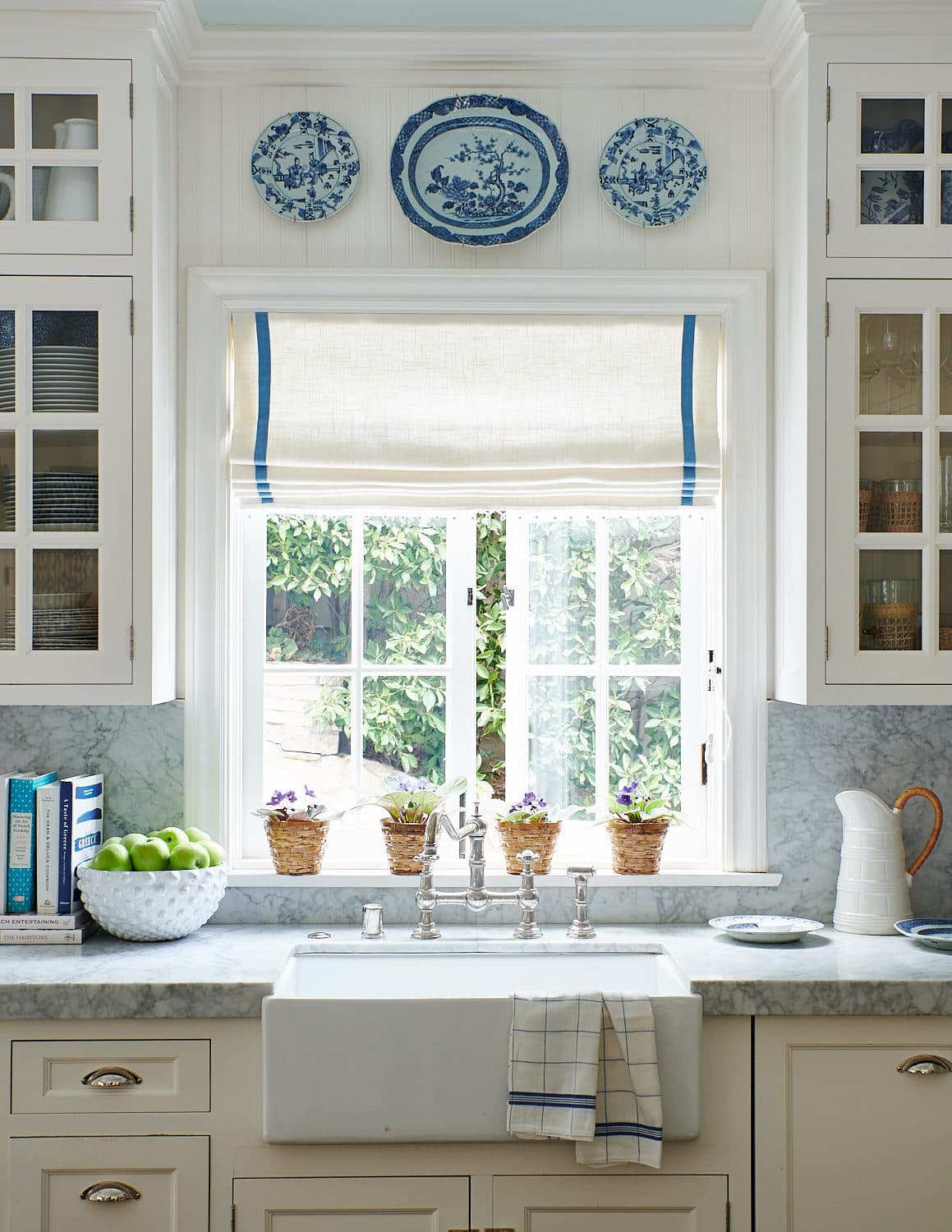
Most of what we are asked to shade in Manhattan and Brooklyn was built before the war: tall, narrow double-hung windows set in deep plaster reveals, a radiator under the sill, a cover in front of the radiator, and trim that nobody wants to hide. A Roman shade is the treatment that works with all of that — it mounts inside or outside the reveal, stacks into a neat band at the head when it is up, and takes a blackout lining without the bulk of a drapery.
The details are what make the difference in those rooms: a stack sized so the top sash is clear, a hem that lands above the radiator cover rather than on it, returns on an outside mount so light does not leak at the sides, and a control on the side that is actually reachable once the furniture is in.
Each shade is cut, lined and sewn in the Roman room of our Long Island City workroom, one subway stop out of Midtown. Nothing is white-labeled and nothing is made overseas. A designer is welcome to come look at a shade before it is finished, check a fold depth against the sample, or bring a client to see the lining in the light.
The same workroom sews our drapery, so shades and panels for one project share the fabric, lining and finishing, and a scheme reads as one piece of work across the apartment. Our installers hang and set every shade we make; we do not hand a finished treatment to a third party.
A shade starts with a window, not a form. We field-measure every opening ourselves before anything is cut, and the measure is where the prewar questions get settled: whether the shade mounts inside the reveal or outside on the trim, how deep a sill really is once the radiator cover is in, and how a tall, narrow opening should stack so the glass is clear when the shade is up.
You specify the face fabric and the lining — privacy or blackout, in white or ivory, with house, blanket or blackout interlining where the shade needs body or the room needs dark. Most orders run C.O.M. (customer’s own material): you ship the goods to the workroom against the order and we confirm yardage off the measurements before cutting, so nothing starts until the fabric is in hand and reserved.
The Roman room sews the shade, lines it, and fits the control — a bead-chain clutch, cordless, or a motor — then our installers hang it, set the limits, and train the folds on site. Because the workroom is in Long Island City, a New York designer can see a shade in muslin or approve a hem and fold depth in person rather than from a photograph, and we schedule the install around the building’s certificate of insurance, service-elevator windows and freight hours.
Flat, relaxed and hobbled (soft-fold) Romans are the three we sew most, with hard-fold, balloon and London styles when a design calls for them. Relaxed is our default: a soft curve at the hem that suits a tall prewar window. Flat reads cleanest in a pattern or a stripe and stacks tightest. Hobbled holds its folds down the full drop, so the shade looks dressed whether it is up or down.
It depends on the reveal. Many prewar openings have the depth for an inside mount, which keeps the trim visible and the shade tight to the glass. Where the sill is shallow, the frame is out of square, or a radiator cover sits proud of the wall, an outside mount on the trim or above it covers the window cleanly and hides the gap. We confirm the mount at the measure and show you what each does to the stack.
Yes. A blackout lining or blackout interlining blocks the light through the fabric itself; light at the edges is handled by the mount. An outside mount with returns, or an inside mount cut close to the reveal, gets a bedroom dark enough to sleep in. If you want the fabric to keep its color and hand, a privacy lining with interlining is the lighter-weight option.
Yes. We can run any motor — Lutron, Somfy, Crestron and others — and we supply and install the motor and set the shade limits. Hard-wired or battery is a decision to make before the walls close, so tell us at the order stage if a project is in construction. We do not do home-automation integration; the client’s AV company ties the shades into the system once they are installed.
Two ways. We sew woven material as a flat Roman in our own workroom, which keeps the lining, the edge and the control consistent with the fabric shades in the same room. For handwoven shades we source from Conrad and install them ourselves, so a project can mix the two and read as one scheme.
Window treatments generally run 8–12 weeks, with the clock starting when both the payment and the fabric have arrived — whichever comes last. That is a general range, not a date; we give you a firm schedule per order so it can be planned against the installation date, and we do not commit to an install until the fabric has physically arrived.
Send the windows, photos and the fabric you have in mind, and we will prepare a written estimate; we can rough one in from your dimensions and always measure before making. An in-home consultation to measure and talk through options is $250, waived on orders over $2,000. We work mostly with designers and architects, and also directly with homeowners.
44-02 11th St STE 201, Long Island City, NY 11101
By appointment only · (516) 289-9661