How to Clean a Fabric Headboard: A Workroom's Method
The short answer
Find the fabric's cleaning code first. Vacuum the headboard regularly with a soft brush attachment. Blot spills straight away with a clean white cloth. Spot-clean only with what the code allows, test on a hidden spot first, and never soak the fabric: moisture that reaches the padding is what ruins a headboard. For silk, mohair, velvet and other delicate fabrics, for antiques, and for anything coded S or X or marked dry clean only, call a professional upholstery cleaner.
Step 1: Find the cleaning code
Upholstery fabrics carry a cleaning code from the mill. On a ready-made headboard it is usually on a tag on the back or underneath. On a custom headboard it is on the fabric spec, and your designer or workroom can confirm it from the pattern name and colorway.
- W: water-based cleaners only.
- S: water-free solvent cleaners only. Water can leave a ring.
- WS (also written W/S): water-based or solvent cleaners.
- X: vacuum only. No liquid cleaner of any kind.
If you cannot find the code, treat the fabric as X until you can. Guessing is how a linen blend ends up with a permanent water ring.
Step 2: Vacuum regularly
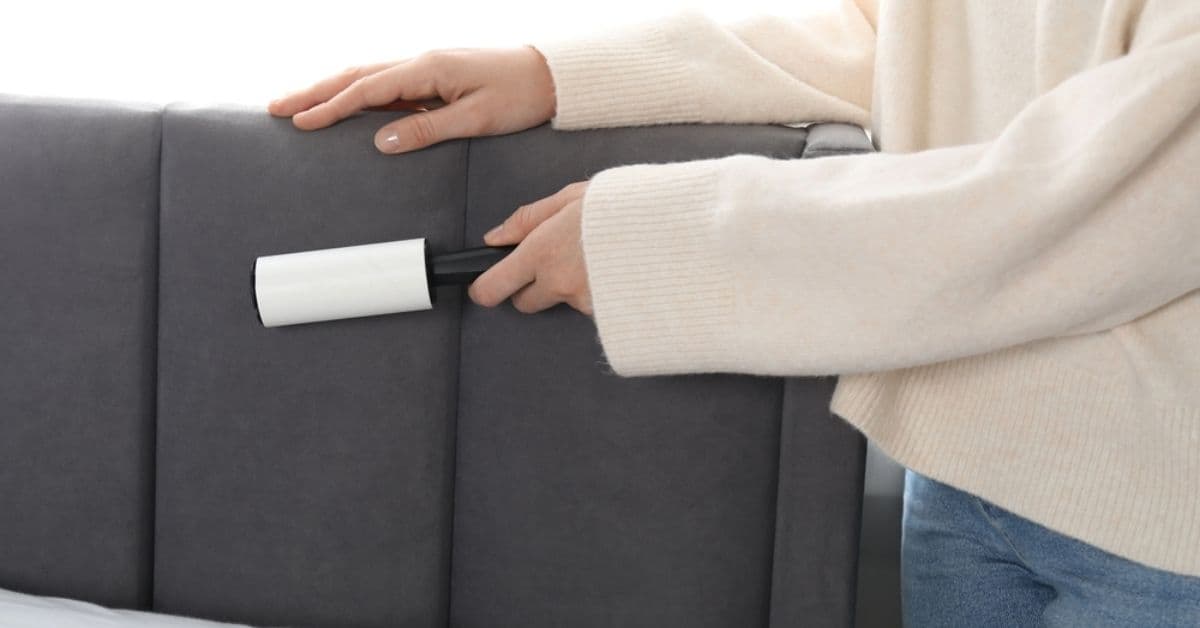
Most headboard care is dry soil removal. Dust, body oils and hair products build up in the fibers, and once the oils oxidize they read as permanent dinginess, especially on pale linens. Vacuum the headboard regularly with a soft upholstery brush, working top to bottom in overlapping strokes. A lint roller helps between vacuums.
On channeled or tufted headboards, run a crevice tool along every seam and around each button. Dust collects in the tufting and darkens it first, which is why an older tufted headboard often looks shadowed at the buttons. On velvet and mohair, finish by brushing lightly in the direction of the pile so the nap lies evenly.
The darker oval at head height on so many headboards is not dirt. It is oxidized oil from hair and skin, the hardest kind of soil to remove from any upholstery, and it is much easier to keep ahead of than to take out.
Step 3: Test before you clean
Test any cleaner on a hidden spot first. The lower back edge of the headboard, behind the mattress, works well. Let it dry completely before you judge the result, because many fabrics look ruined wet and fine dry. If the color moves, the texture changes or a ring forms, stop and call a professional.
Step 4: Spot-clean stains on W and WS fabrics
- Fresh spills. Blot straight down with a dry white cloth. Do not rub or scrub: both drive the stain deeper and rough up the fiber. Keep blotting with clean parts of the cloth until nothing transfers.
- General spots. Mix a few drops of clear, dye-free dish soap into a cup of distilled water. Dampen a white cloth in it, wring it nearly dry, and blot the stain from the outside edge inward. Follow with a cloth dampened in plain distilled water to lift the soap, then blot dry with a fresh cloth.
- Oil and grease. Dust a fresh oil stain with cornstarch, leave it overnight, and vacuum it off before any wet cleaning.
- Ink, dye, red wine and set-in stains. Call a professional upholstery cleaner rather than experimenting.
For S-coded fabrics, leave stain removal to a professional. Water will mark the fabric, and solvent cleaning is best done by someone with the right products and ventilation.
Step 5: Let it dry
Let the cleaned area air-dry, with a fan moving air across the surface rather than straight into it. Keep pillows and bedding off the headboard until it is completely dry. Do not use a hair dryer or a heater: a hair dryer held close can separate the fabric from its backing.
What ruins a headboard
- Too much water. Water that soaks through the fabric wicks into the foam or batting, dries slowly, and leaves tide lines on the face fabric, flattened padding and sometimes mildew inside the piece. A cloth wrung nearly dry is the most moisture a headboard should see.
- Steam cleaners. Almost always a mistake on a headboard, for the same reason.
- Bleach and hydrogen peroxide. They can break down foam and yellow batting even when the face fabric survives.
- Heat. A hair dryer or heater can damage the fabric's backing.
- Rubbing and scrubbing. They spread the stain and wear the fiber.
Upholstered beds
The side rails and footboard of an upholstered bed get the same care as the headboard: vacuum them at the same time, and spot-clean them by the same code.
When to call a professional, or the workroom
Call a professional upholstery cleaner for silk, mohair, velvet and other delicate fabrics; for fabrics coded S or X or marked dry clean only; for antiques; and for any stain that has set or did not lift after one careful attempt.
If the headboard has real damage, such as a set stain across the face, crushed padding or a torn seam, recovering it is often a better answer than heroic cleaning. Valley Studio works to the trade for designers and architects, with workrooms in Los Angeles and New York and an office in San Francisco. We reupholster and build custom headboards, and we are glad to look at photos and tell you honestly whether a piece needs a cleaner or a new cover.
For designers: put the fabric's cleaning code in your client's care notes when the headboard is delivered. It saves this guesswork later.
Related reading: How Much Does a Quality Custom Headboard Cost? · Wall Upholstery: What It Is and How It's Built
FAQs
Can I use a steam cleaner on a fabric headboard?
We don't recommend it. Steam drives moisture into the padding, where it dries slowly and can leave tide lines or mildew.
How often should I clean a fabric headboard?
Vacuum it regularly and blot spills as they happen. For a deeper clean, call a professional upholstery cleaner rather than wetting the fabric yourself.
Can I use baking soda on a headboard?
Not as a wet paste, which puts water into the padding. For a fresh oil stain on a water-safe fabric, we use dry cornstarch, then vacuum it off.